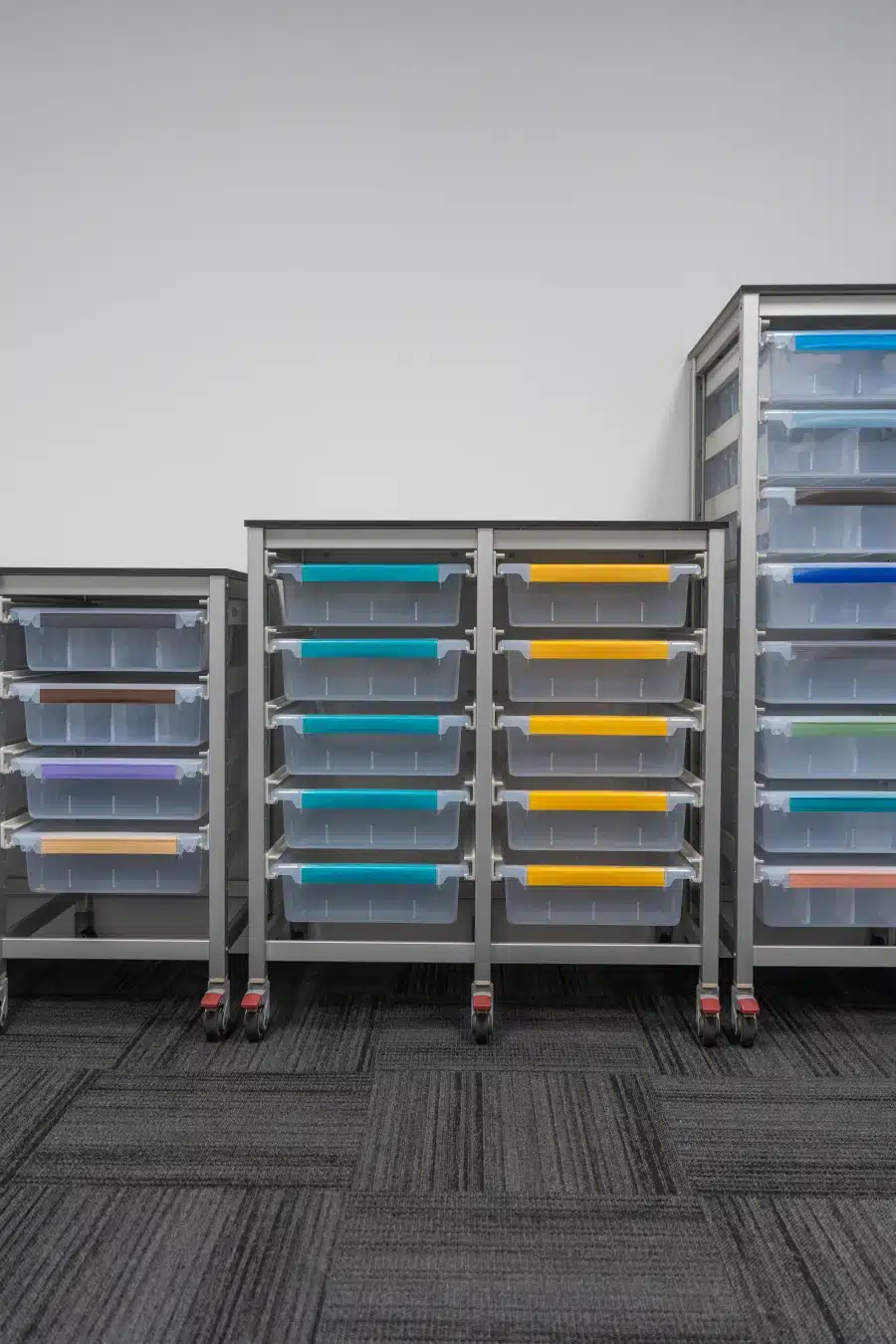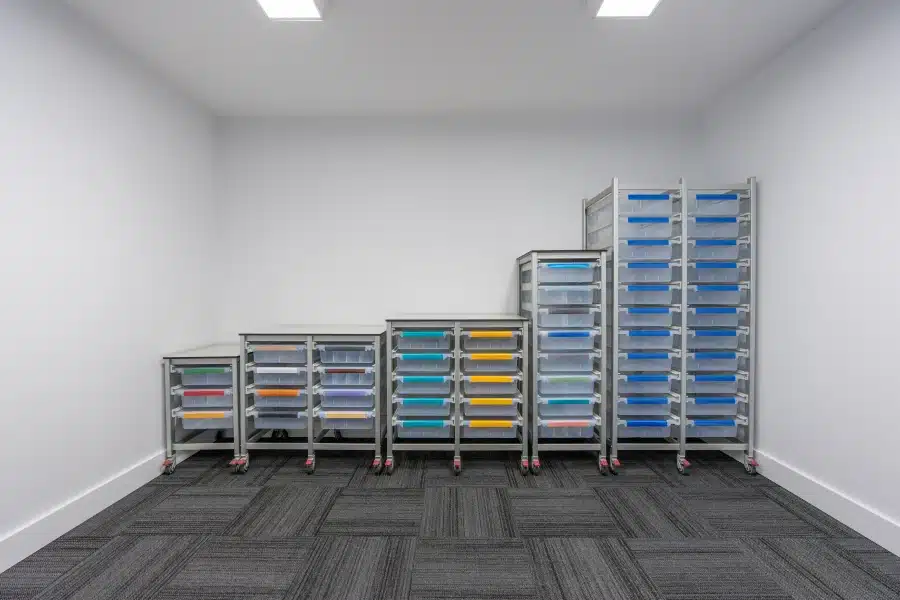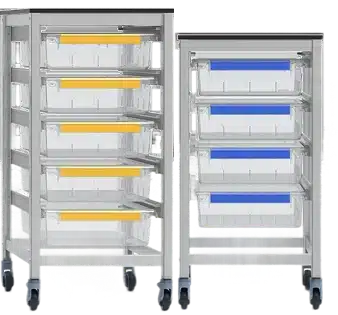
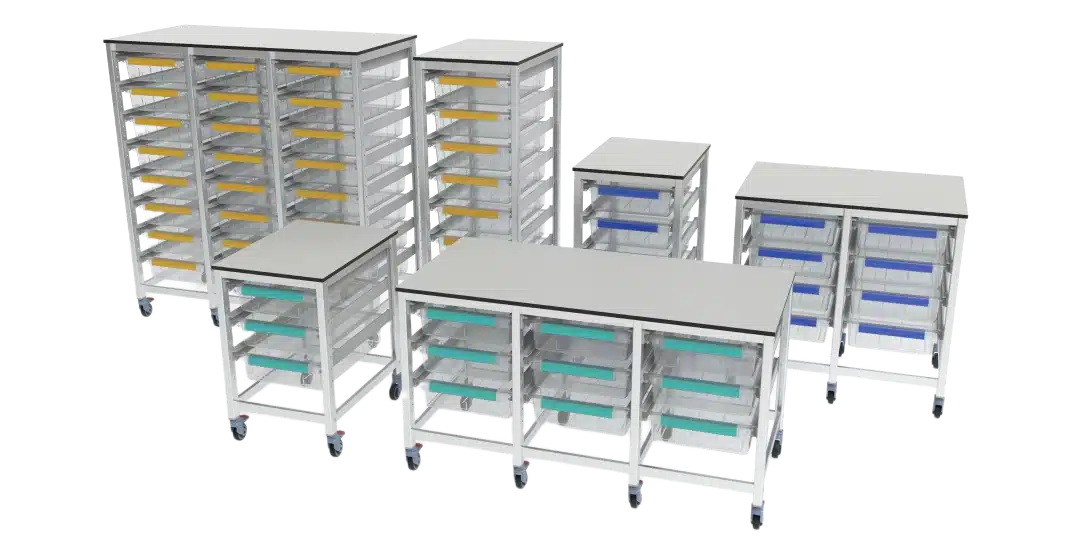

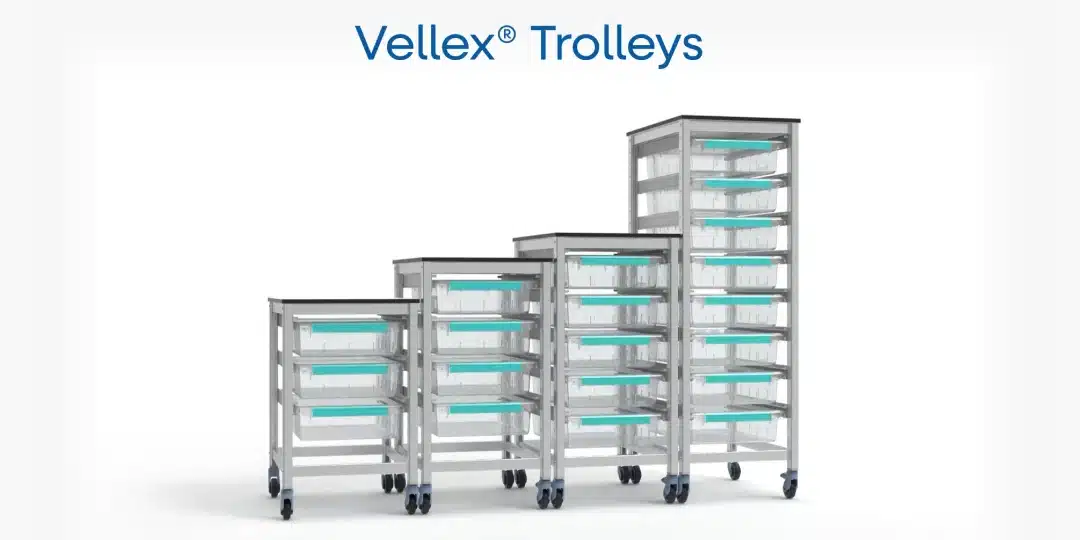
Versatile Spaces® Vellex® trolley range brings mobility, flexibility, and ergonomic efficiency to laboratory and education environments. Designed to integrate seamlessly with the wider Vellex® system, these trolleys are available in single-, double-, or triple-bay configurations and four standard heights to suit a variety of workflows and storage needs.
When work needs to move, storage should move with it. Vellex® trolleys bring essential materials closer to where they are needed, helping teams create more responsive and efficient workspaces. Designed as part of the wider Vellex® system, they extend the flexibility of the storage environment beyond fixed locations.
Three Bay Tall Trolley, with 8 Drawers per bay.
Single Bay Tall Trolley including 8 Drawers.
Single Bay Above Bench Trolley, including 5 Drawers.
Double Bench Height Trolley, including 4 Drawers per bay.
Single Bay Under Bench Trolley, including 3 drawers.
Triple Bay Under Bench Trolley, including 3 Drawers per Bay.
Compare Vellex® against traditional joinery and conventional storage systems to see why more organisations are making the switch. Purpose-built for science, research and education, Vellex® delivers the cleanability, flexibility and scalability that traditional storage systems simply can’t match.
| Features | Vellex® System | Alternate Systems | Joinery |
|---|---|---|---|
| High-Density Storage | ✓ | ✕ | ✕ |
| Easy to Clean – Autoclavable | ✓ | Limited | ✕ |
| Modular & Scalable | ✓ | Limited | ✕ |
| Reconfigurable Layouts | ✓ | Limited | Limited |
| Compliant, Chemical-Resistant | ✓ | Limited | Limited |
| Heavy-Duty Drawers – 15kg | ✓ | 8–10kg | ✕ |
| Colour-Coded Visual System | ✓ | Limited | ✕ |
| Future-Proof, Freestanding | ✓ | Limited | ✕ |
What makes laboratory storage different from standard storage systems?
Laboratory storage systems must support regulated environments, including safe handling of chemicals and specimens. This requires materials, configurations, and layouts designed for compliance, traceability, and controlled workflows rather than general-purpose storage.
Are these systems suitable for PC2 and PC3 laboratory environments?
How do modular storage systems improve laboratory efficiency?
Can storage systems be reconfigured as laboratory needs change?
What types of laboratories are these systems designed for?
Do modular systems reduce the need for future renovations?